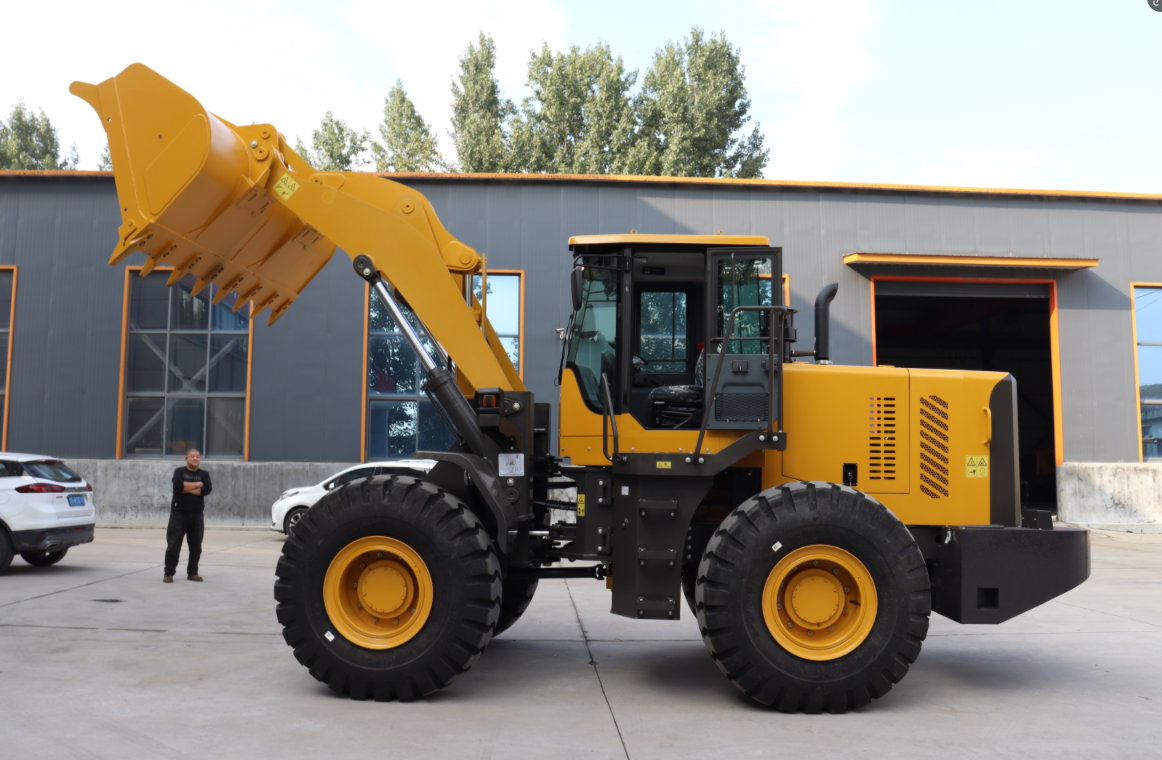
During long construction periods, operator fatigue directly impacts construction safety and project progress. While traditional mechanical lever operation is intuitive, its direct connection to multi-way valves results in high operating torque, and frequent reversing and lifting consume significant physical strength. SITC, through the application of hydraulic pilot technology in its wheel loaders, has shifted loader operation towards “precision control.”
What is Hydraulic Pilot Technology?
Low Pressure Controls High Pressure: In the pilot system of SITC wheel loaders, the operator no longer holds a heavy steel lever, but a precision pilot valve. A minimal effort to move the handle drives the large main control valve behind it.
Action Response: This design avoids the play and wear delays of mechanical levers, allowing every fingertip movement to be translated into bucket lifting or tilting within milliseconds.
Reduced Operating Intensity
Lightweight Feel: The operating force of the SITC pilot handle is typically only one-quarter that of a traditional lever. This means that the driver can complete complex compound movements with only gentle wrist strength, effectively avoiding shoulder and arm muscle strain caused by prolonged operation, thus ensuring focus throughout the day.
Integrated Design: In the cab of the wheel loader, the previously cumbersome multiple control levers are integrated into a single hydraulic pilot handle, eliminating the need for frequent switching between multiple levers and making the operation process smoother.
Improved Precision
Linear Feedback Mechanism: The pilot valve in the SITC wheel loader has excellent flow ratio characteristics. The movement of the handle is precisely proportional to the speed of the action, without the abrupt jerking felt in traditional models.
Operational Safety: This smooth transition logic ensures that the material remains stable and undisturbed even when the loader is in a high-lift position. This precise end-point control.
Frequently Asked Questions
Q: Is the hydraulic pilot system of the SITC wheel loader more prone to failure than the mechanical lever?
A: Due to the numerous pin connections, long-term wear of the mechanical lever can lead to increased clearance and less clear control. The pilot system uses hydraulic oil to transmit signals, resulting in less physical wear. As long as the hydraulic oil filter is replaced on time, its system lifespan and accuracy retention are far superior to mechanical structures.
Q: Will high hydraulic oil temperature affect the feel of the pilot handle?
A: SITC’s hydraulic system is equipped with an independent pilot oil circuit pressure reducing valve and cooling system to ensure a constant handle feel, unaffected by pressure fluctuations in the main working circuit.
Summary: The application of the hydraulic system not only demonstrates SITC’s R&D strength in the core hydraulic field of wheel loaders but also reflects SITC’s deep concern for the end-user’s operating experience.
Post time: Jun-08-2026