
In engineering operations, the high efficiency and reliability of loaders directly affect project progress and operating costs. But faced with the dazzling array of loader equipment on the market, how can we see through the parameters to see through the differences in their internal designs and processes? SITC combines more than 20 years of experience in the industry to discuss with you several core aspects worth paying attention to.
1. Structure and craftsmanship are the basis for durability
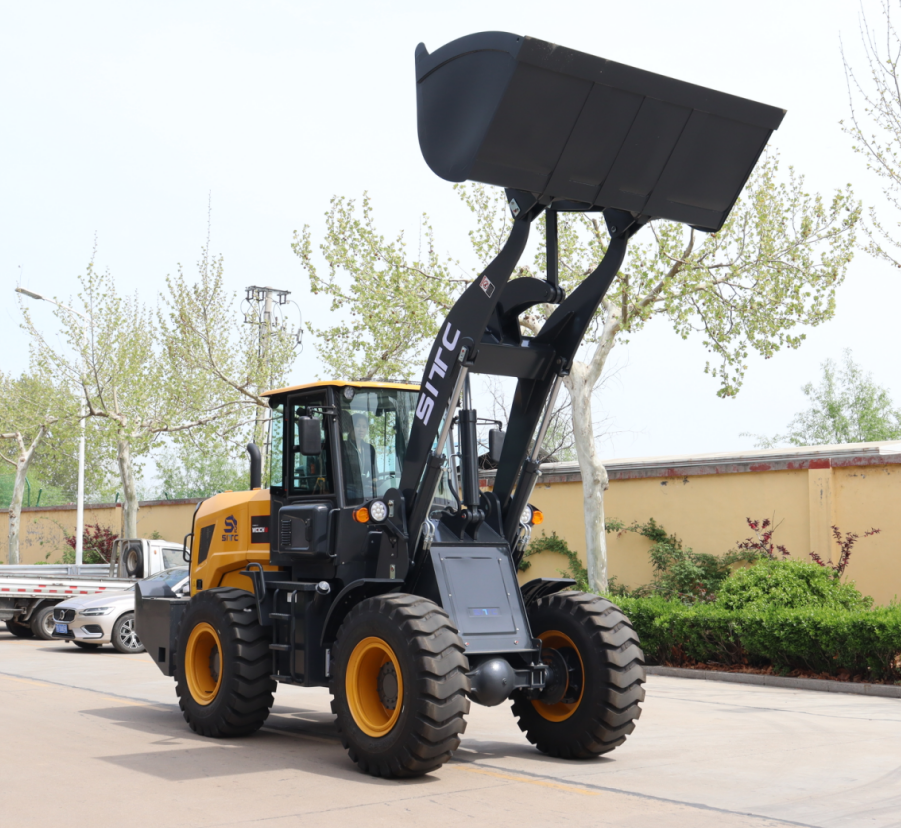
A loader can work stably for a long time and cannot do without a solid body structure. You can pay attention to the design of its frame and boom when purchasing. The fuselage is manufactured using a stamping and drawing process and a box-type structure. This process and design help improve overall rigidity and resistance to deformation. The three-layer hinge design aims to balance stress, improve steering flexibility, and strive to reduce deformation caused by fatigue during use.
2. Flexibility and stability of power and transmission systems
The working ability of the loader is closely related to the power and transmission system. Many manufacturers provide a variety of power configuration options to meet the needs of different regions and different working conditions. For example, engines can be selected from Yunnei, Weichai, Cummins, Yuchai and other brands, with a wide power range. In terms of transmission system, some models are equipped with a patented heavy-duty drive axle, which helps the vehicle maintain good traction and braking performance on complex road conditions such as slopes.
3. Safe and humane driving experience
Operation comfort and safety are the keys to improving work efficiency. Whether the cab has double safety certification to prevent rollover and falling objects, which provides an additional layer of protection for basic safety. Inside the cab, details such as the front-to-back adjustable instrument panel, electronically controlled armrest box, and shock-absorbing seats are dedicated to creating a fatigue-reducing and smooth-operating working environment for operators of different sizes.
4. Quality considerations throughout the vehicle
The durability of a loader is often reflected in many subtle details. For example, the enlarged and thickened shock-absorbing pads that are standard in many parts of the vehicle help reduce vibration transmission from the engine and gearbox; the independently designed dual-circuit air brake system is designed to provide redundant safety guarantees for driving braking; designs such as aluminum alloy air tanks, metal heat dissipation grids, and customized tires with widened and deepened patterns have also been considered from the perspectives of corrosion prevention, durability, and ground adaptability.
5. Various accessories to meet different needs
Modern loading operations often require “one machine with multiple functions”. Therefore, equipping with hydraulic quick-change devices has become a common option. Wider hanging points and optimized center of gravity design strive to expand functions while maintaining necessary load-bearing stability. From standard buckets to coal buckets, grain buckets, wooden grab forks, dozer blades and other attachments, they can be matched according to your actual working conditions, thus expanding the application range of the equipment in shoveling, clamping, loading and unloading and other scenarios.
Choosing a loader is like choosing a partner to work with. We provide a variety of models ranging from 1-ton to 3-ton loaders, and through our service network at home and abroad, we strive to provide users with full-process support from selection to maintenance.
Post time: Jun-10-2026