
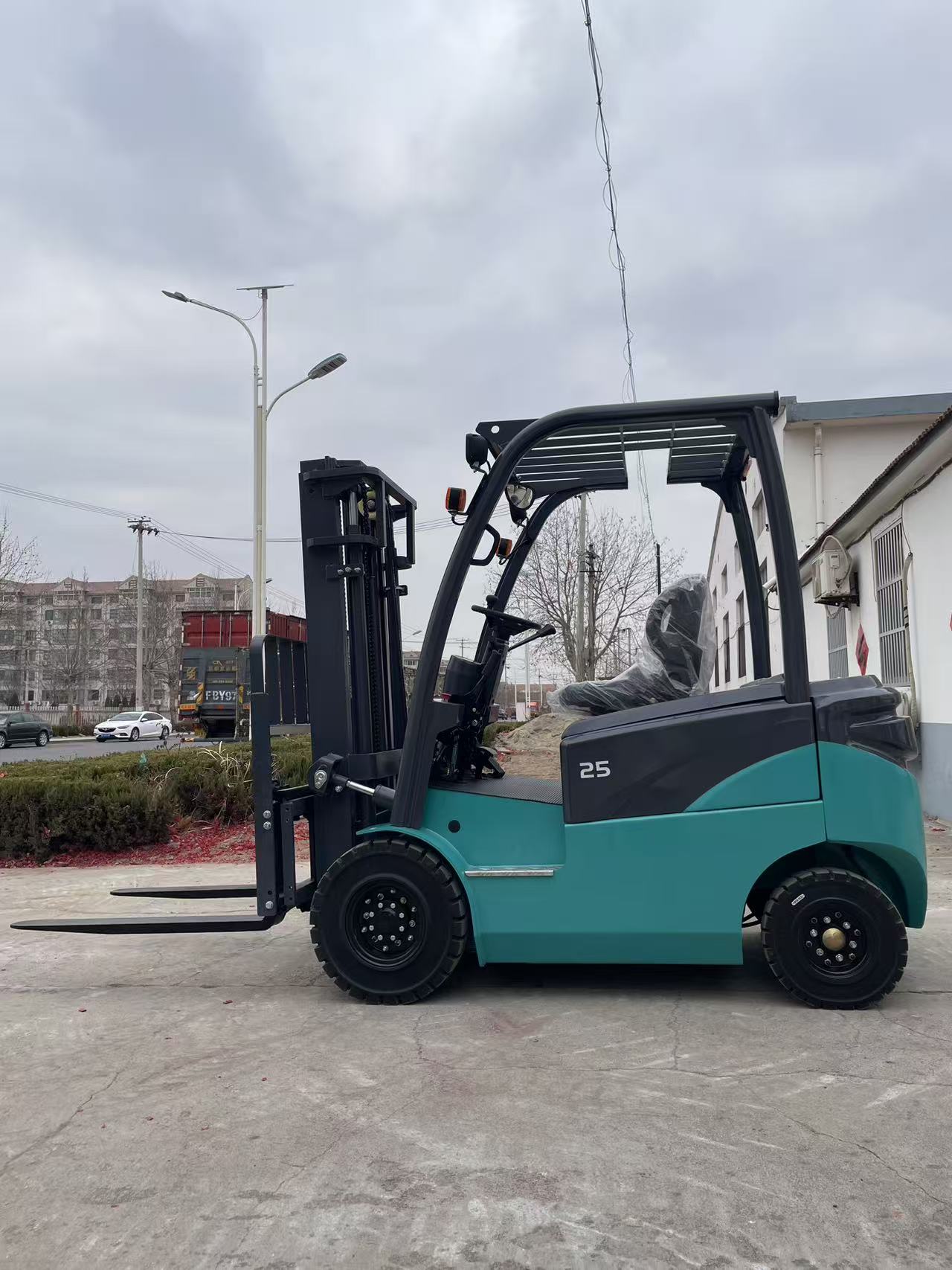
Electric forklifts are common equipment in modern warehousing, logistics, and industrial material handling, belonging to the category of stacking and handling equipment. Their core function is to achieve vertical lifting and horizontal movement of goods through electric drive, making them suitable for factories, warehouses, docks, and other scenarios requiring frequent loading, unloading, or stacking. Compared to traditional fuel-powered forklifts, electric forklifts have advantages such as low noise, zero emissions, and flexible operation, making them particularly suitable for indoor environments or those with high environmental protection requirements.
Technical Principles and Core Structure: The main power source for electric forklifts is a battery or lithium battery. An electric motor drives a hydraulic system to achieve the lifting and forward/backward movement of the forks. Its core components include the power system (battery, motor), transmission system (chain or gears), hydraulic system (oil pump, cylinders), and control system (operating handle, sensors). Some models support fork height adjustment to adapt to the stacking requirements of different racks. The electric drive design reduces mechanical wear and maintenance frequency, making it suitable for long-term, high-frequency use.
Post time: May-15-2026