
• Hydraulic vibration system: It transmits pressure through hydraulic oil, ensuring a more stable vibration frequency (measured to be over 50Hz). It can quickly expel air from asphalt/concrete, preventing air voids and cracking, making it especially suitable for thin pavement layers (such as asphalt repairs within 5cm).
1. Municipal repair: After repairing the surrounding areas of manhole covers and cracks on the road surface, where large road rollers cannot enter, a 1-ton model can precisely compact the edges, avoiding secondary settlement.
2. Community hardening: For entrances to underground garages and garden pathways, the hydraulic vibration model can reduce the impact on surrounding greenery, and the vibration noise is also over 30% lower than that of mechanical models (measured decibel value ≤75dB).
3. Landscaping engineering: Permeable concrete, colored asphalt pavement, and a hydraulic system capable of controlling vibration intensity to avoid crushing aggregates and maintain pavement texture.
Core parameters determine performance, with a focus on these three points:
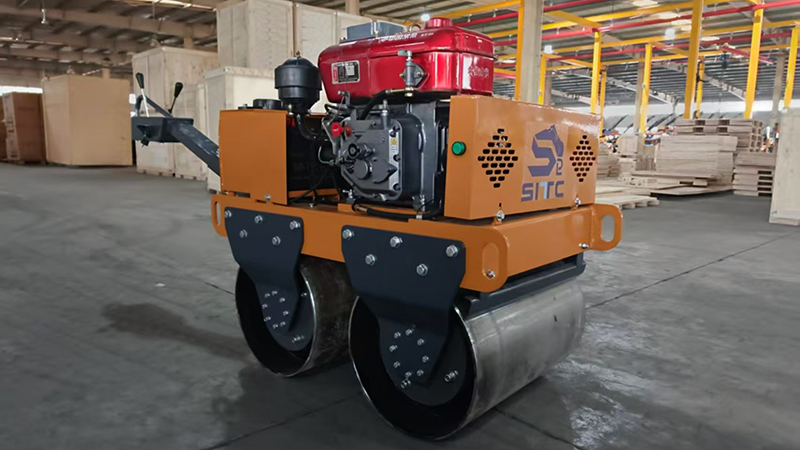
• Vibrating wheel width: It is recommended to choose 600-800mm. If it is too narrow, the efficiency will be low; if it is too wide, it will be difficult to turn (especially in scenarios with many curves in residential areas).
• Engine power: 8-10 kW is sufficient. Too much power will consume too much fuel, while too little power will result in “a small horse pulling a big cart” and insufficient power when climbing slopes.
• Climbing ability: A model rated at 20° can actually climb a 15° slope, which is already good. Choose one with a differential lock, as it is less likely to slip on wet and slippery roads.
Post time: May-15-2026